SproutLoop
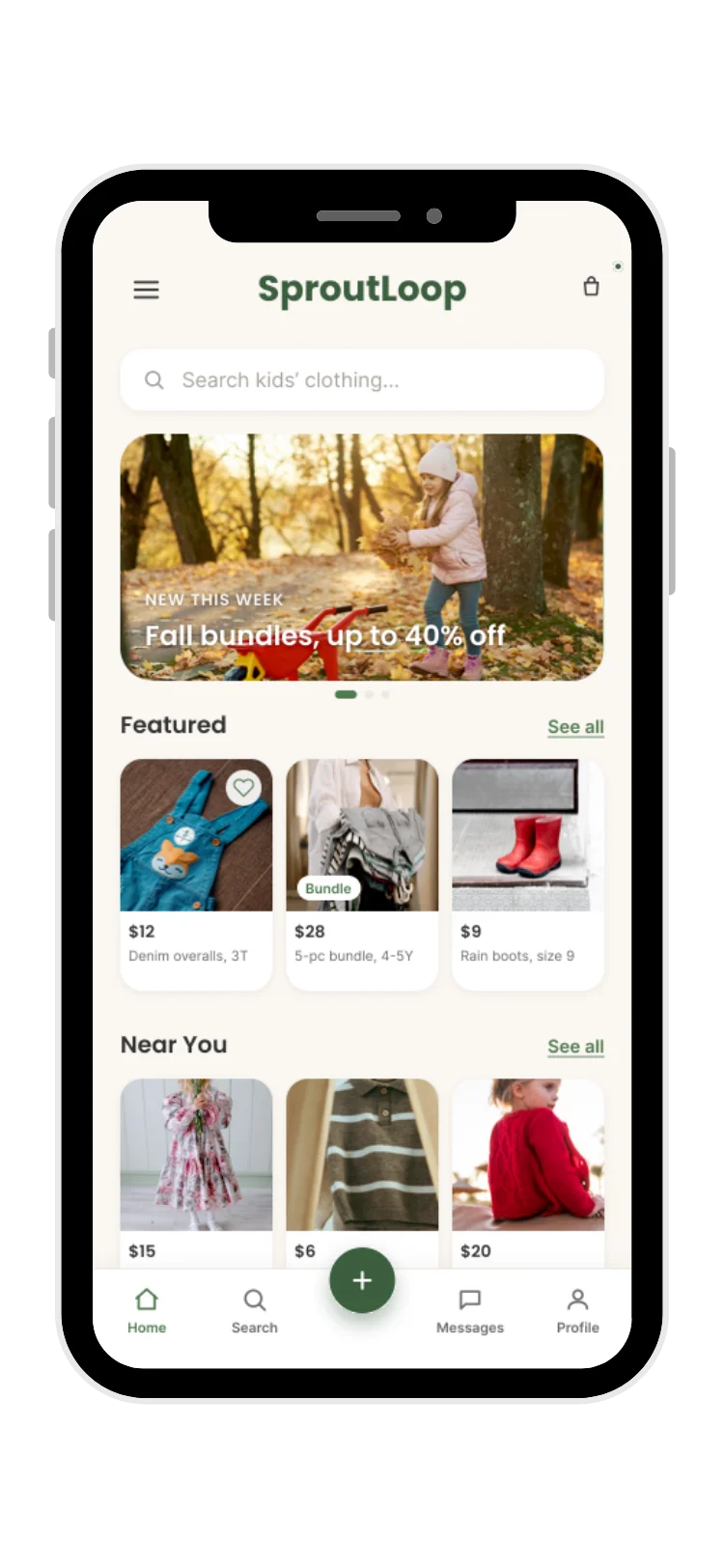
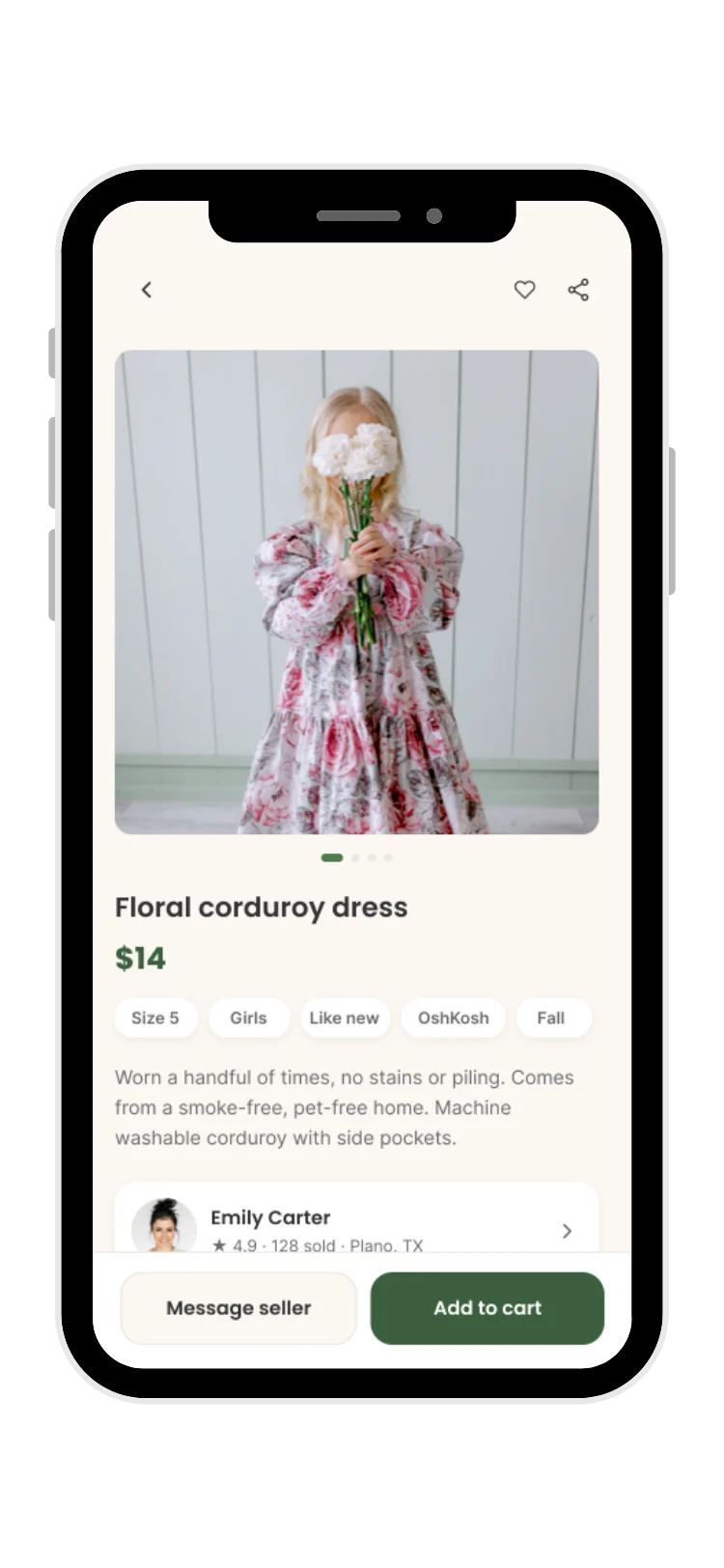
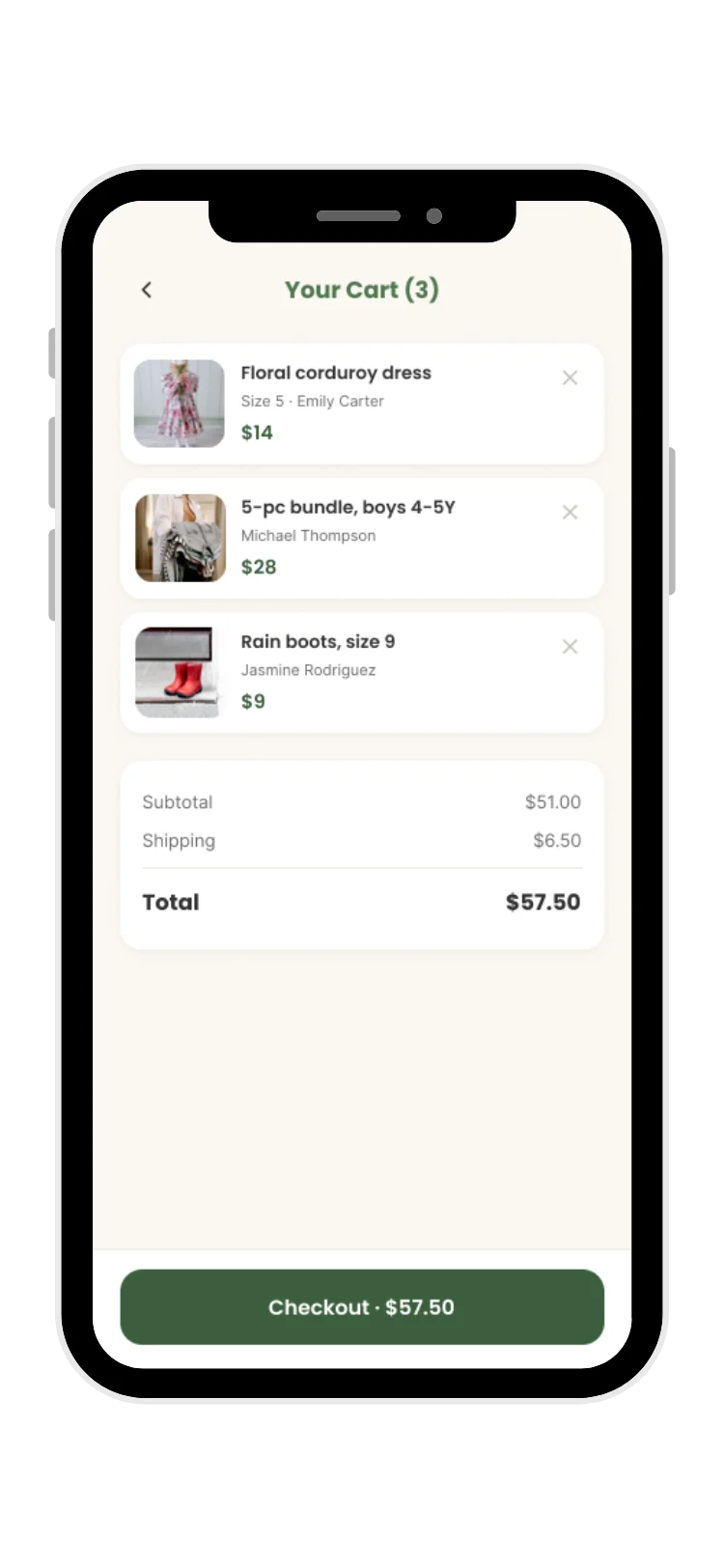
A resale app built specifically for outgrown kids' clothes
A concept app I designed start to finish throughout the Google UX Design Certificate, based on real experiences of parents swapping and selling clothing through Facebook groups and other marketplace apps.
The problem: Kids outgrow clothes fast, and there is a large group of parents who want to exchange or earn a bit through their second-hand items. Unfortunately, the current community is a patched-together mess of Facebook Marketplace groups, comment sections for "dibs," and uneasy local meetups set up through DMs. I became curious about what it would actually take to make this process more convenient, so I went and talked to the people already doing it.
Twelve screens, four flows
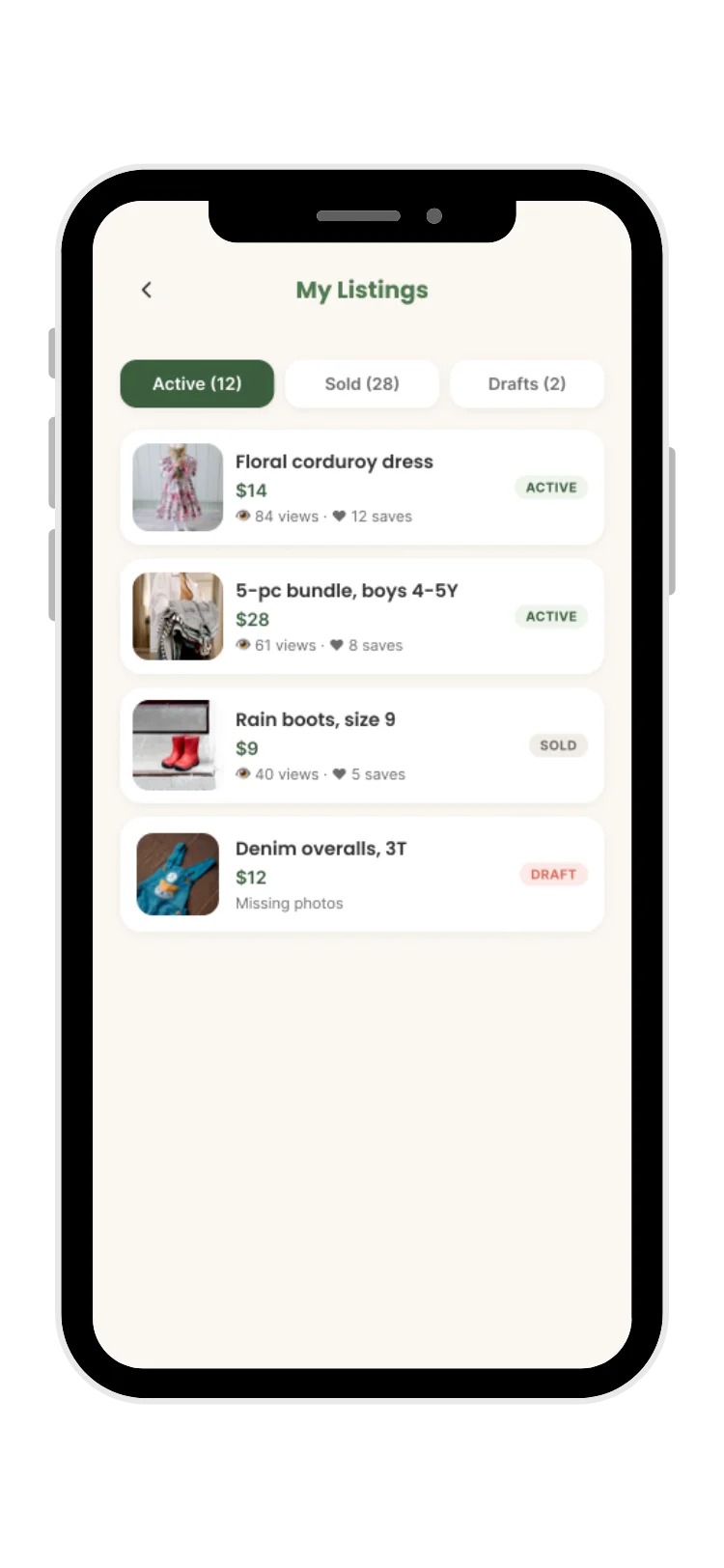
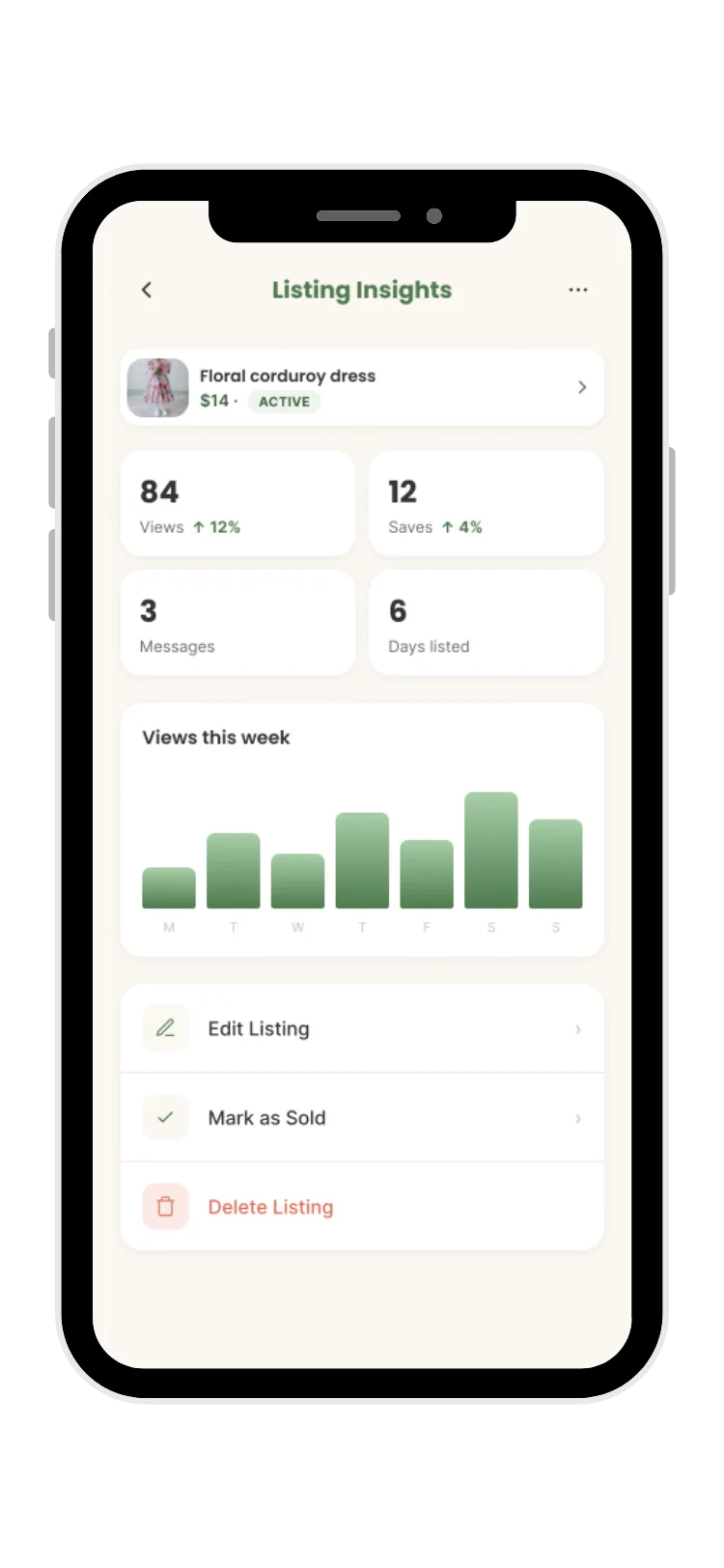
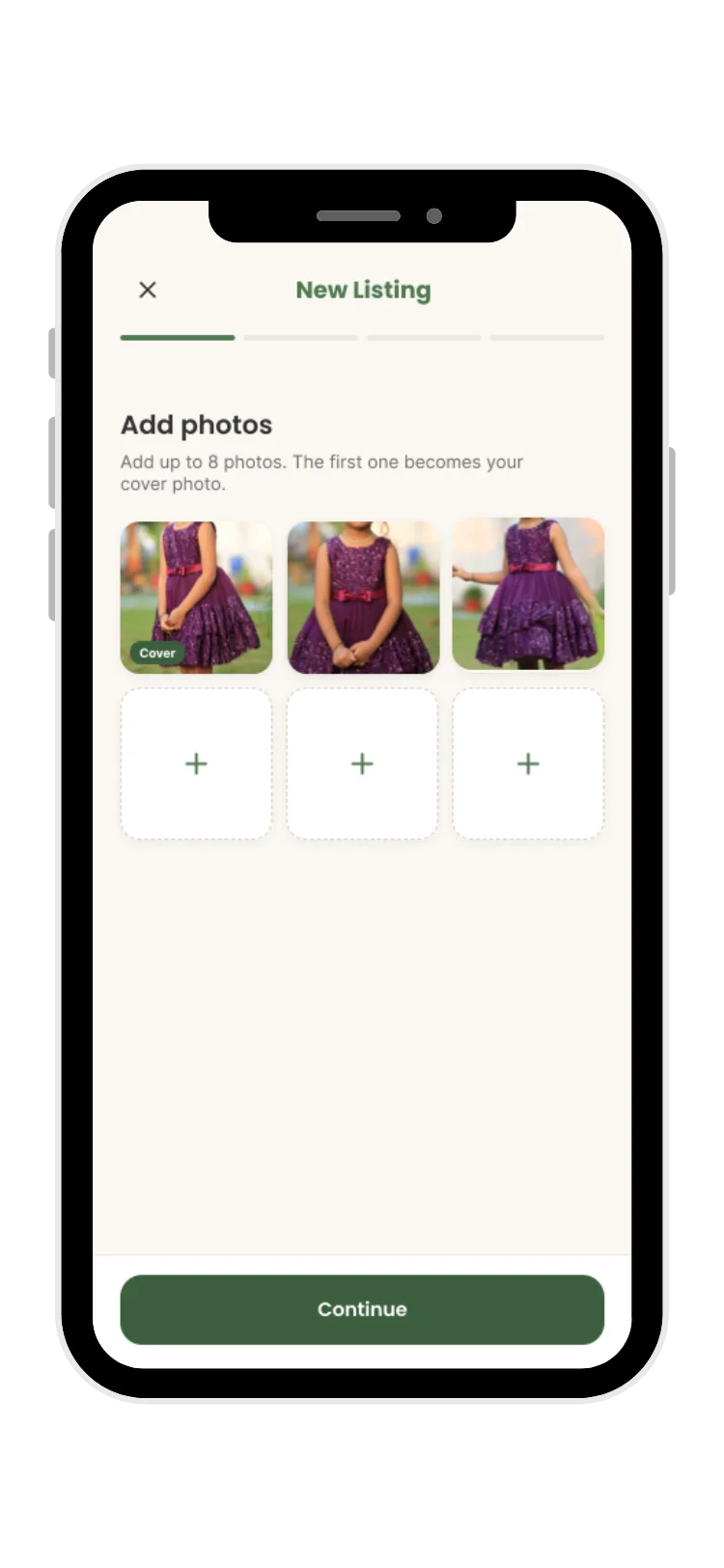
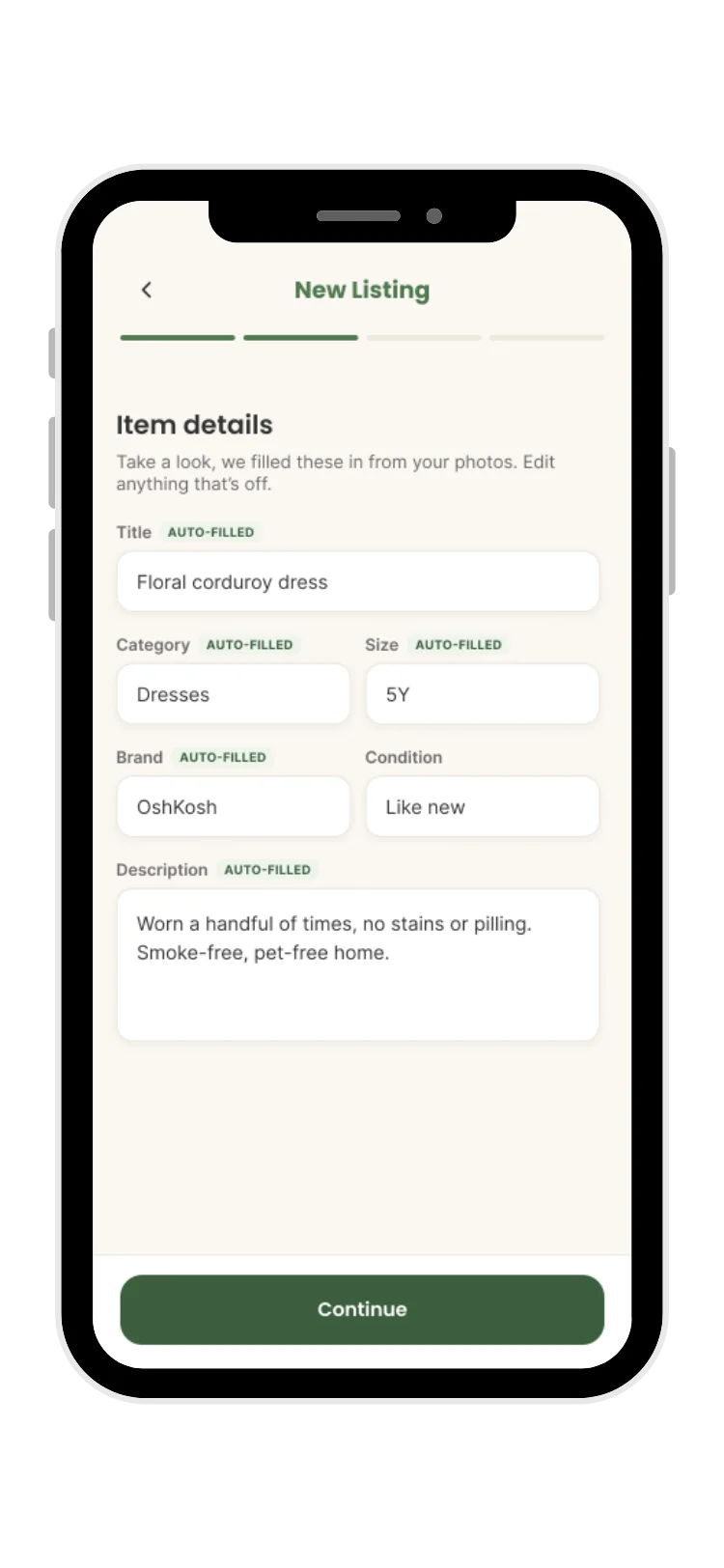
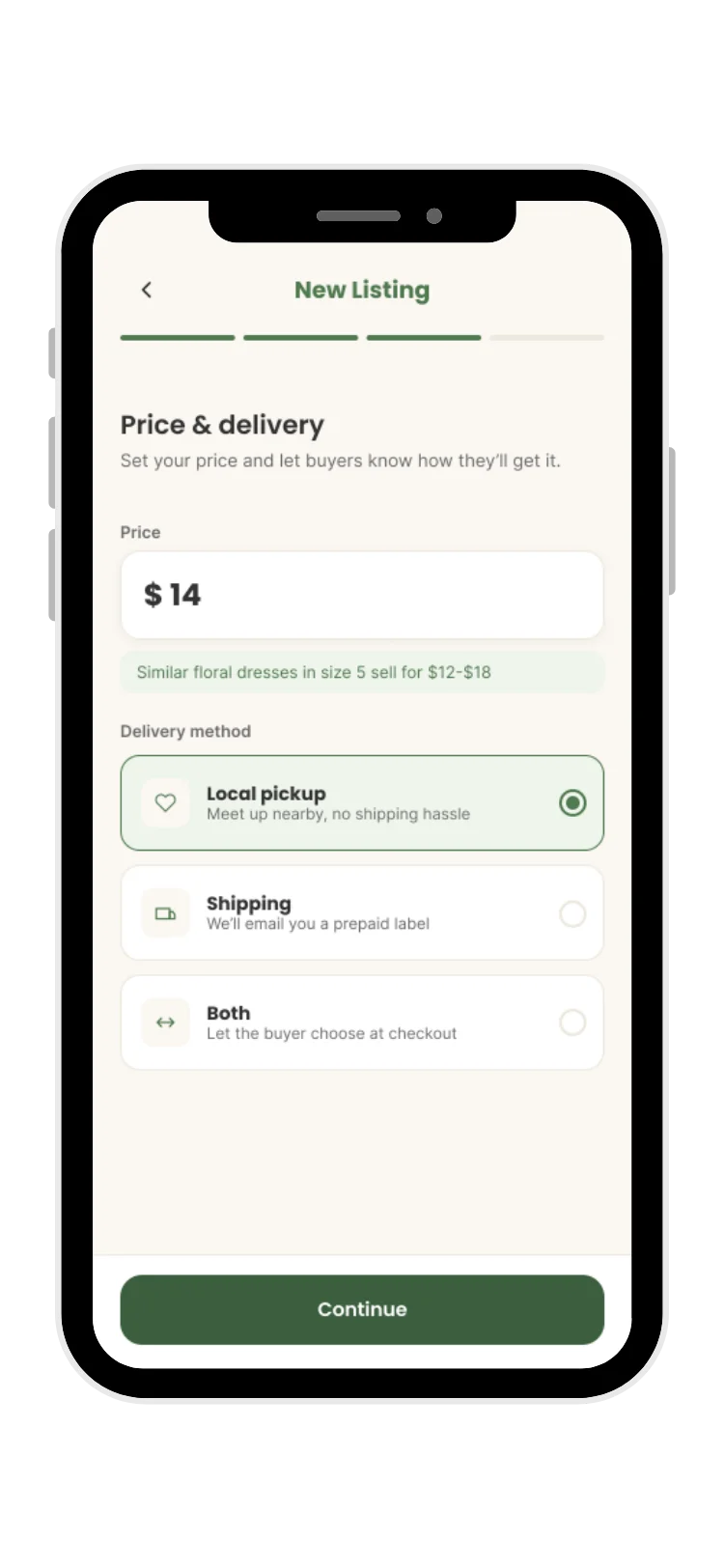
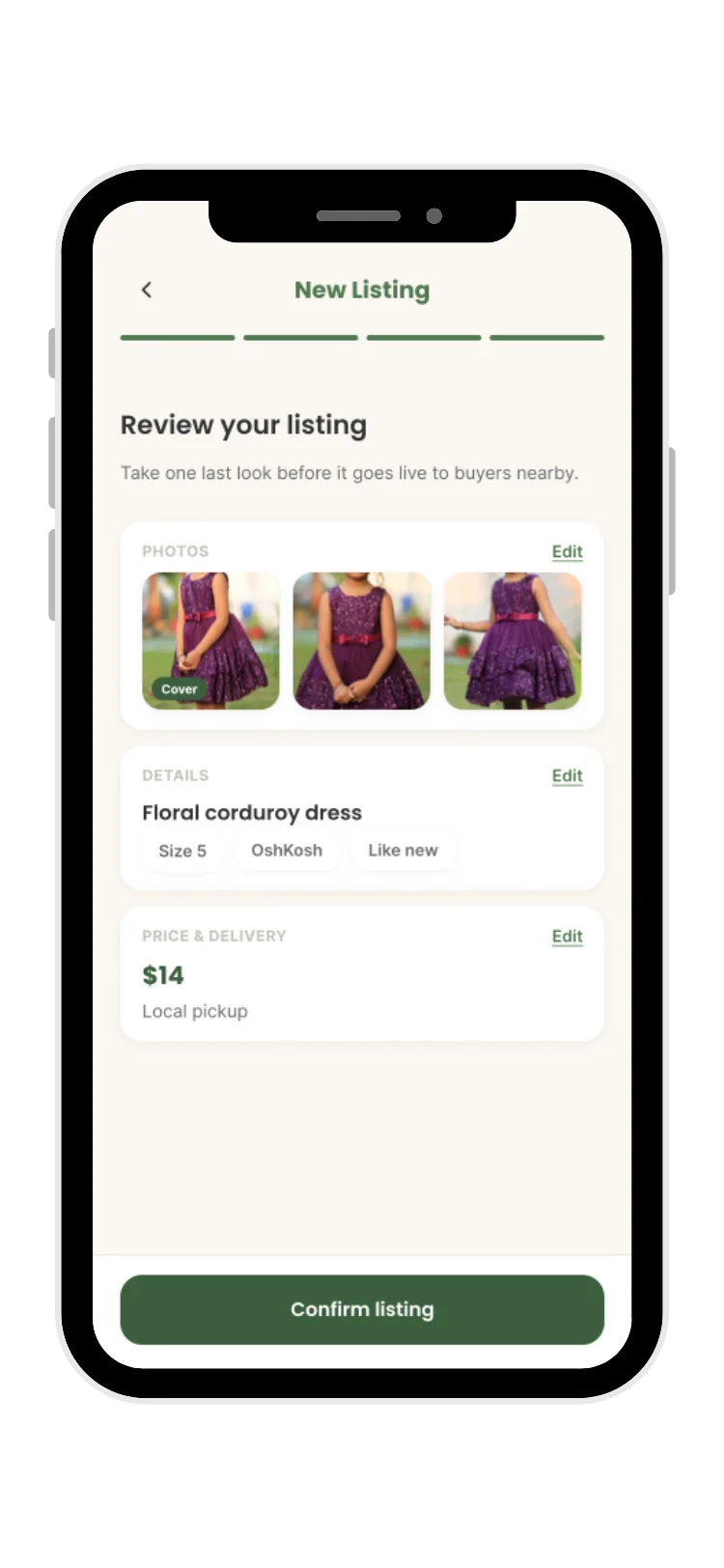
Click through the high-fidelity screens covering browsing & buying, creating a listing, messaging and profiles, and listing analytics.

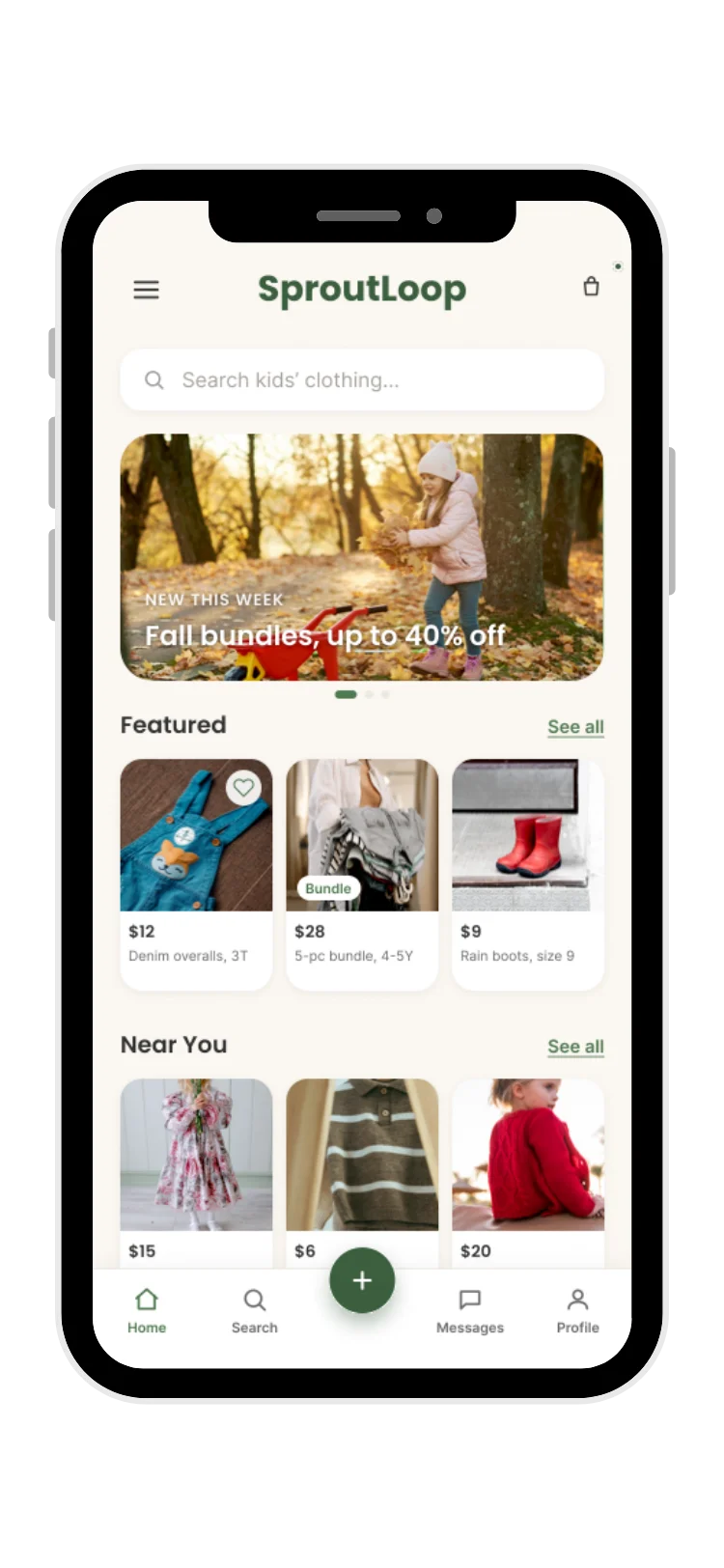
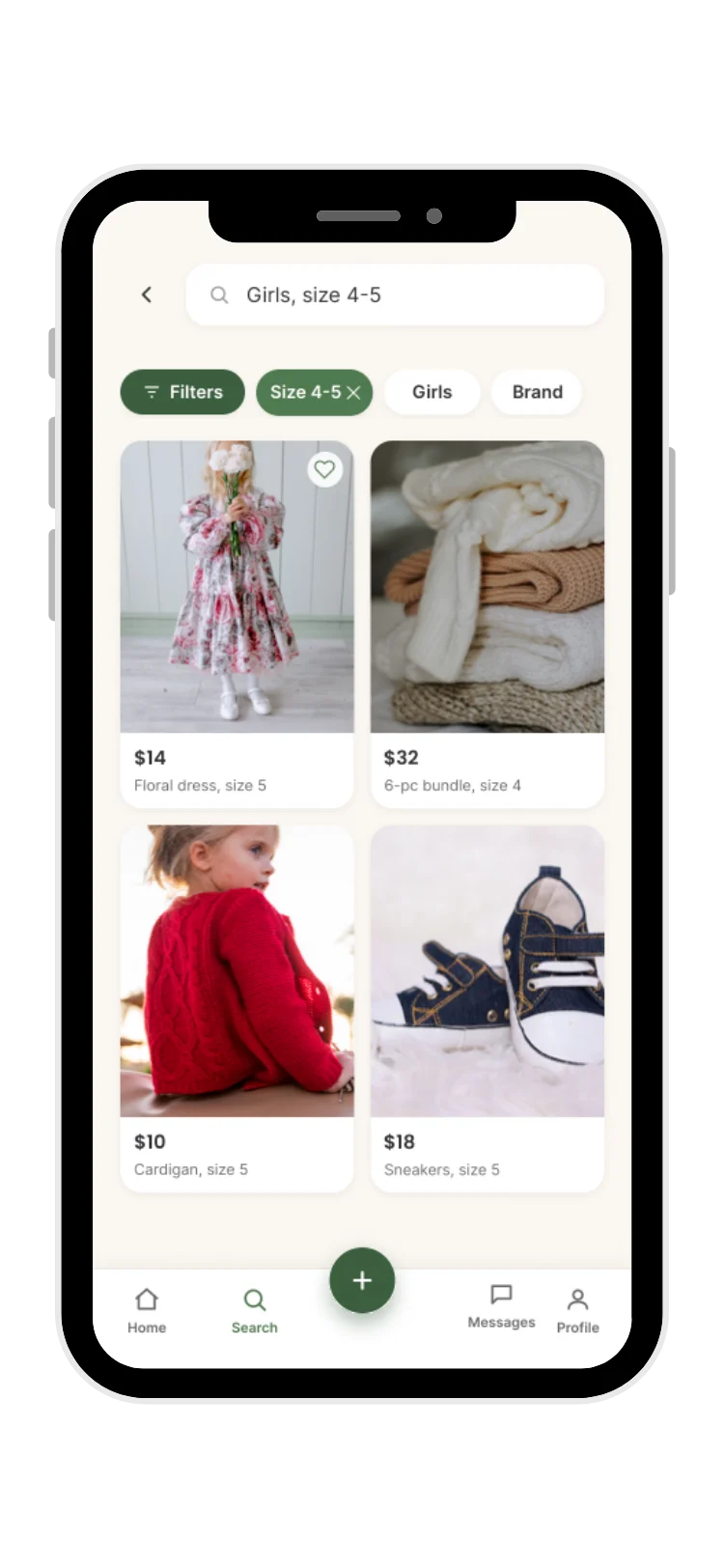
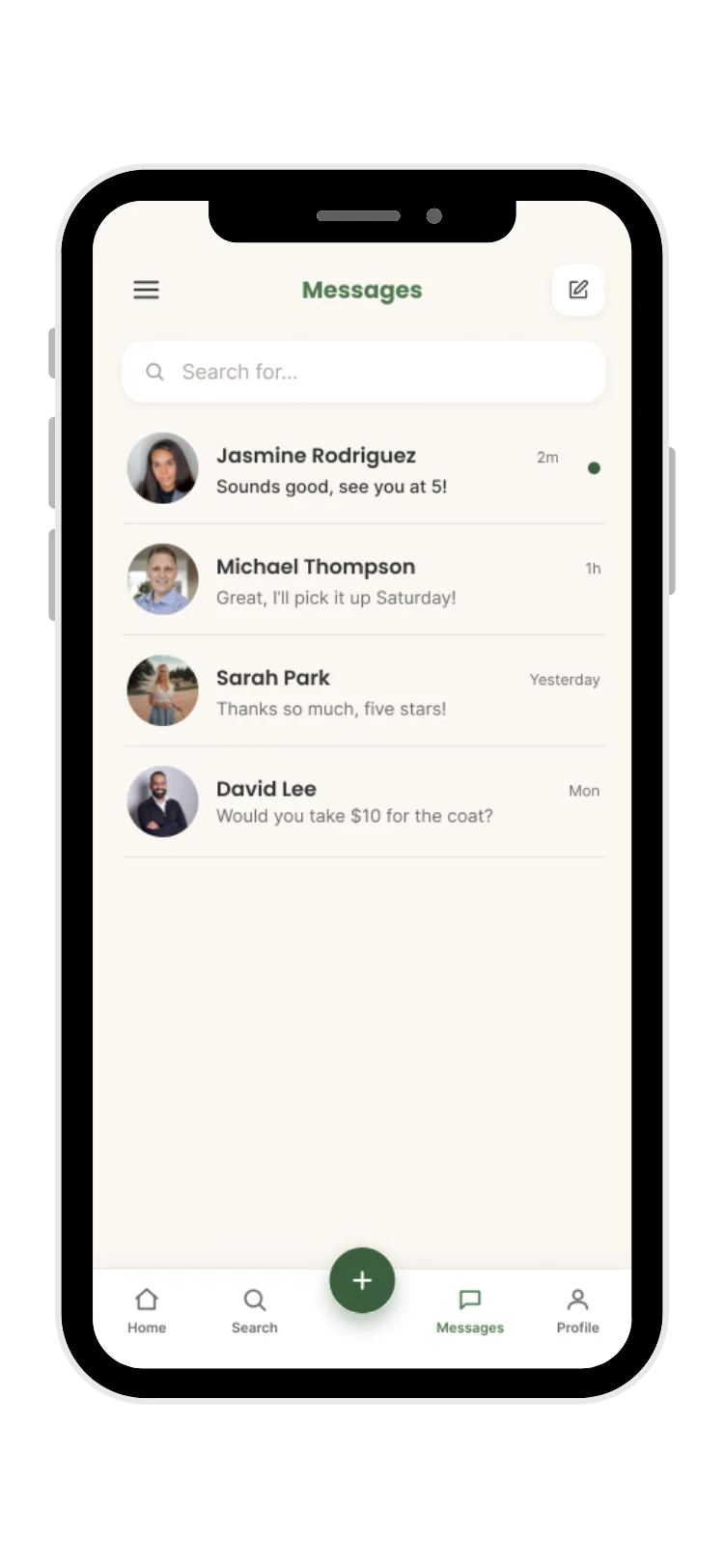
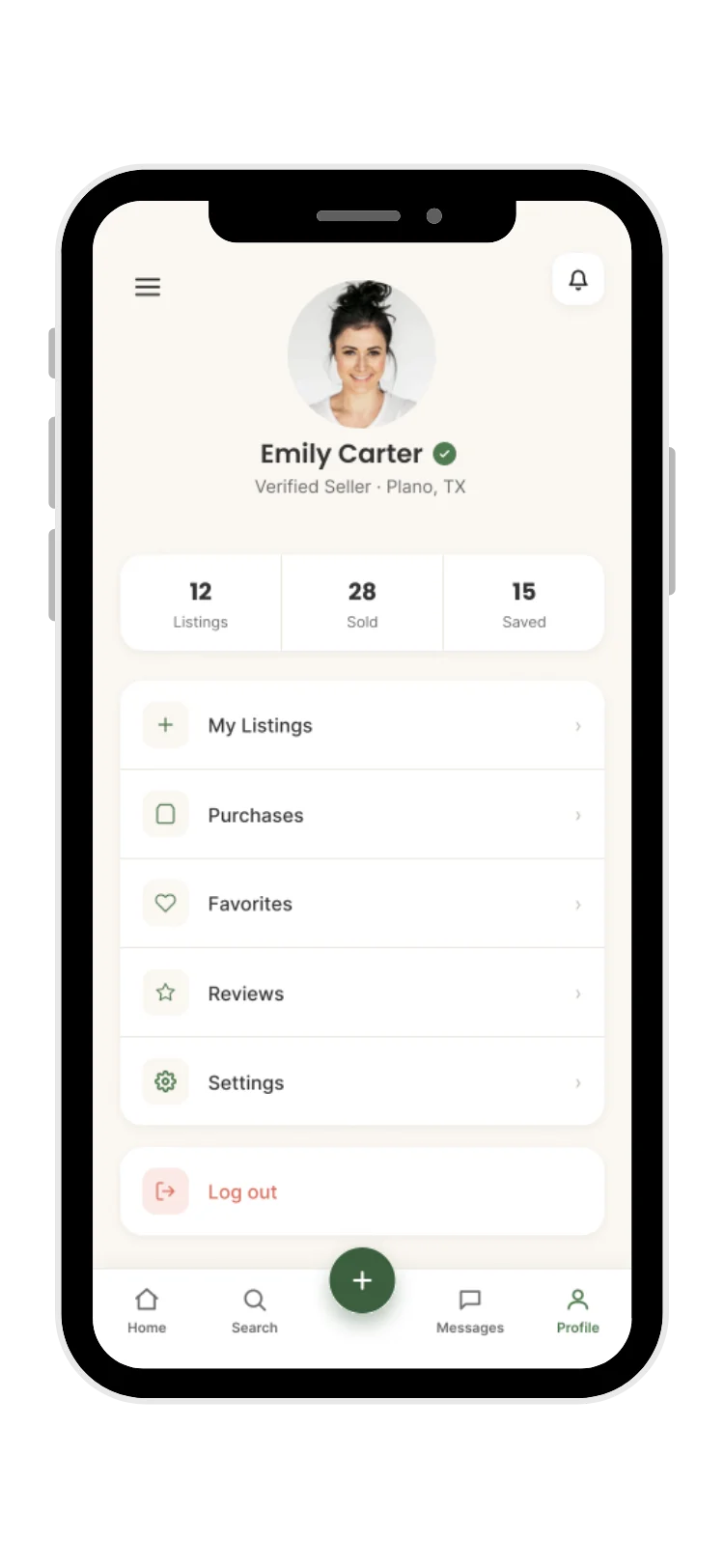

Interviewing parents in the swap-and-sell groups
I spoke with 5 different parents who were engaged in Facebook communities centered around exchanging or selling children's clothes. These were the target users of SproutLoop, in the actual place where they were already doing this. Here are a few consistent insights:
- The process itself was the most painful part for them. The back-and-forth in comment threads, multiple people claiming the same item, and coordinating the handover. It was described as a nightmare.
- Users wanted an opportunity to both sell their items locally and deliver the items via shipping. Not one or the other. Sometimes, local transactions made sense, while other times it was easier to ship them to places that were out of reach.
Three shoppers, one loop
Three characters kept popping up as I researched and conducted interviews: a person who was desperate to declutter their attic, the price-sensitive parent looking for a good second-hand deal, and the father who simply wanted a more coherent market environment. Take a look at my personas.

Goal: Sell her kids' outgrown clothes quickly and easily to declutter her home and earn a little money back, without it becoming another chore.
Goals
- Declutter her children's closets
- Earn extra money for future clothing purchases
- List items quickly without spending hours writing posts
Frustrations
- Existing marketplaces feel cluttered and disorganized
- Buyers ask questions already answered in the listing
- Coordinating pickups can be stressful

Goal: Find affordable, quality clothing for his fast-growing son and offload what no longer fits, through an app that's actually easy to navigate.
Goals
- Buy affordable, quality clothing for a growing son
- Sell clothes his son has outgrown to make room at home
- Use an app that's easy to navigate
Frustrations
- General marketplaces have too many unrelated listings
- Messaging multiple sellers is time-consuming
- Arranging pickups around his work schedule is hard

Goal: Find affordable, gently used clothing for her daughter from sellers she can actually trust, without wading through unrelated listings.
Goals
- Find affordable, gently used children's clothing
- Shop by size, age, and season
- Buy bundles to save money, from trustworthy sellers
Frustrations
- Children's clothes are hard to find on general marketplaces
- Sizes are listed inconsistently
- Shipping costs can outweigh the value of inexpensive items
Current platforms solve resale generally, but miss a specific lifecycle problem
Facebook Marketplace
IndirectHighly trafficked, multi-functional, yet chaotic and inconsistent. Positioned as the one-stop shop for a market of anything, with messaging based on convenience and social influence.
Depop
DirectFocused on aesthetic appeal and being mobile-first. Targets Millennial and Gen-Z fashion enthusiasts with messages focused more on self-expression than on functionality.
Poshmark
DirectA combination of resale retail and social selling, positioned as a resale community built on the power of social commerce, with messaging emphasizing interactivity over speed.
Mercari
DirectAll about convenience without complication and friction, positioning itself as the frictionless resale market. Recently retired the feature to allow local delivery and shipping.
All four are useful and widely used, but none of them were built for children's clothes.
Resale experience design beyond the screen
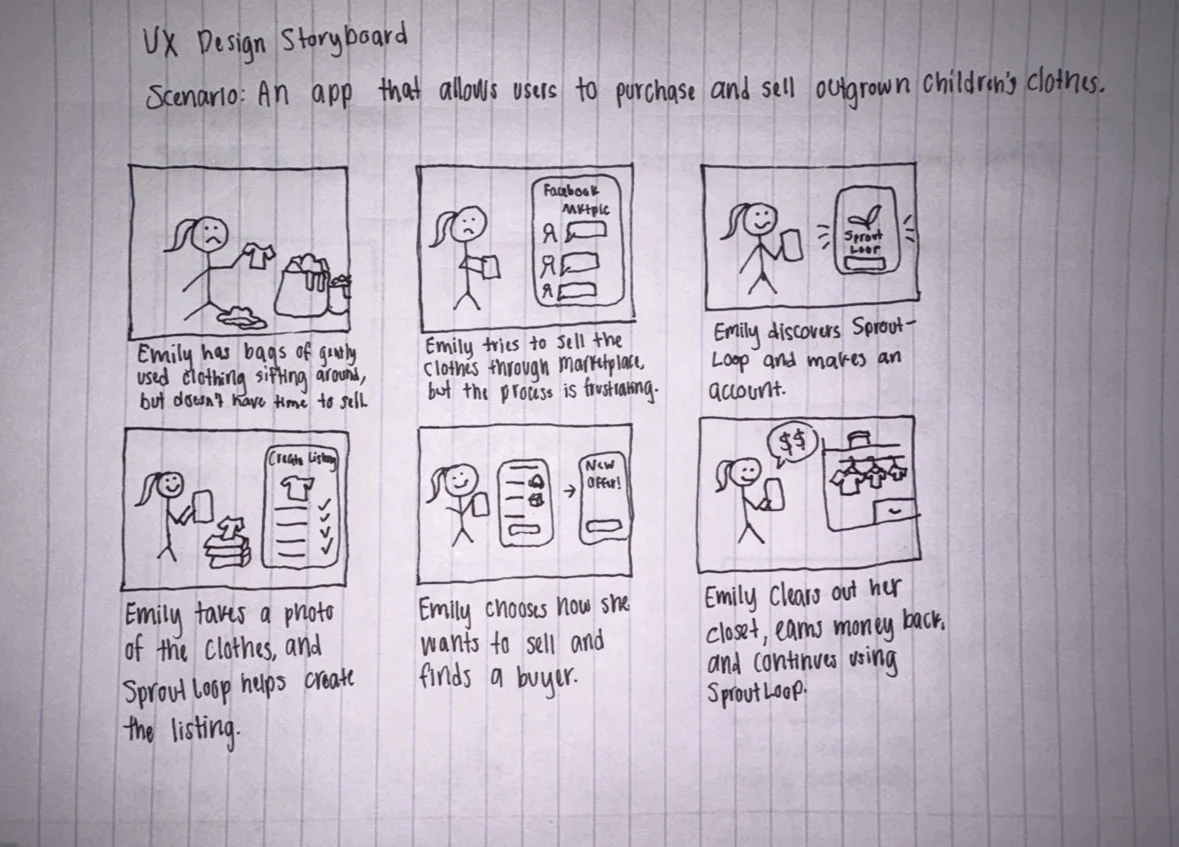
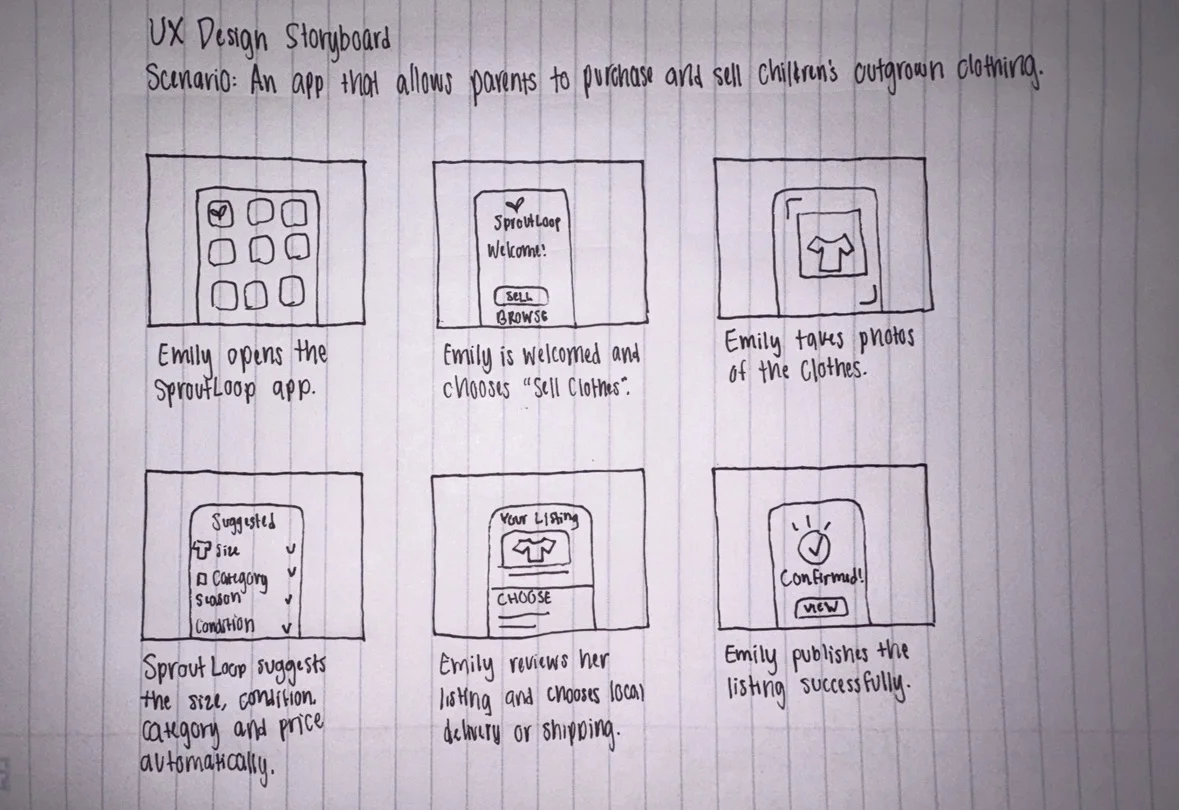
The central part of designing the experience was minimizing the pain points that parents have while reselling outgrown children's clothes. Rather than deciding whether to use shipping or local delivery, the seller creates only one listing and uses the most suitable option, or both!
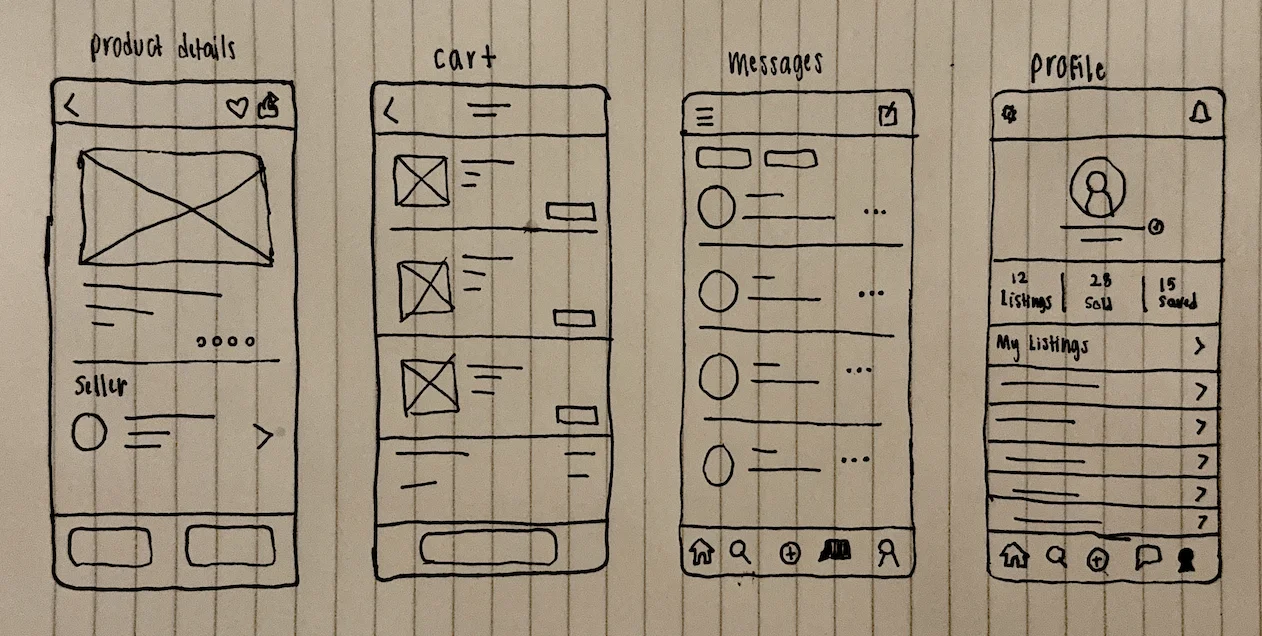
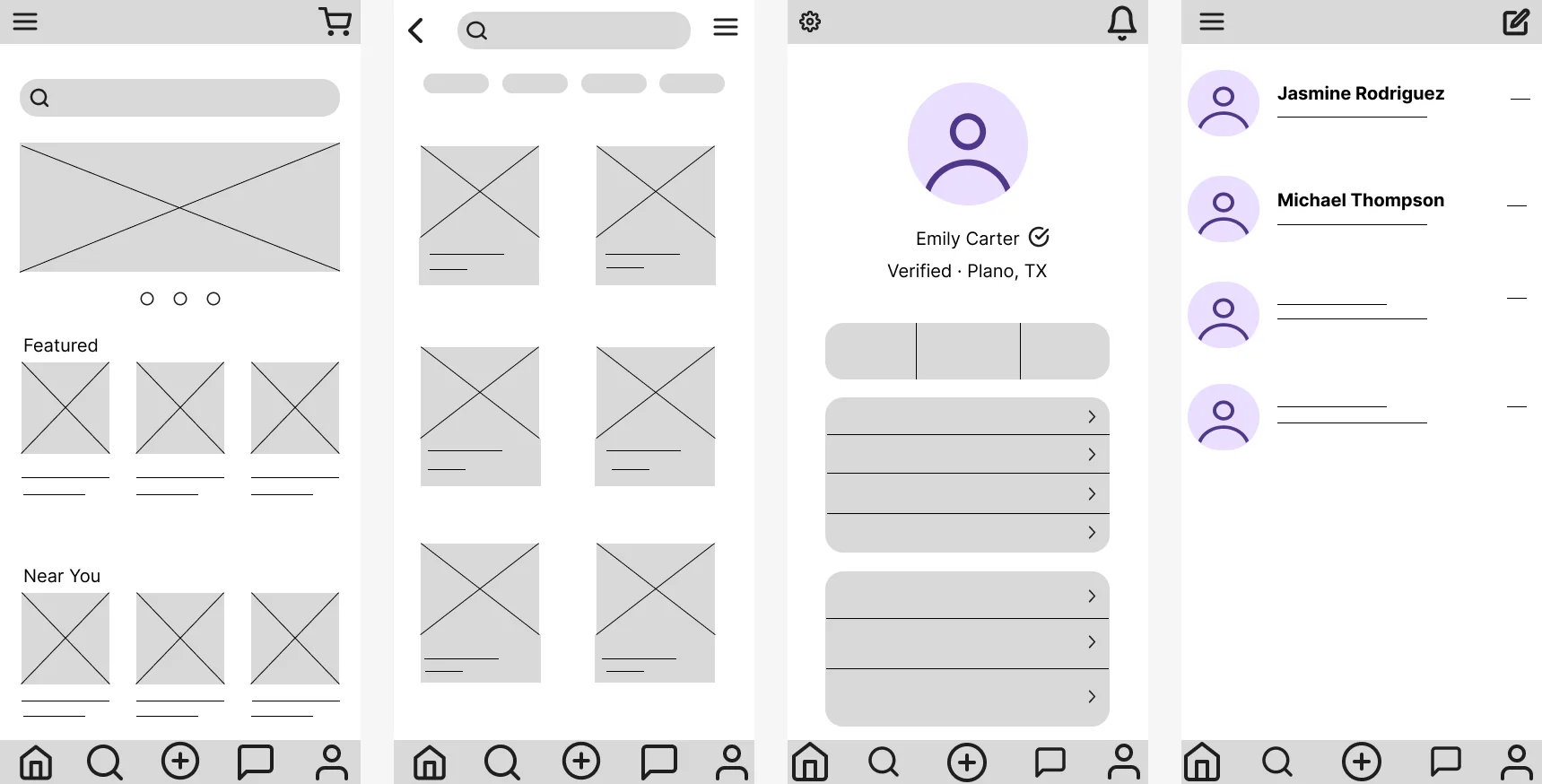
I explored my options for design through paper sketches, Figma wireframes and storyboarding, working out the process both inside and outside of the app.
Testing the core marketplace experience
I conducted a moderated usability study with five participants to evaluate the core buying and selling experience in SproutLoop. Participants were asked to create a listing, review a seller's ratings, and report or block a user while thinking aloud throughout the session.
Creating a listing felt intuitive
All five participants were able to locate the Sell button and successfully complete the listing flow. Participants also responded positively to the AI-assisted auto-fill feature, noting that it reduced the effort required to create a listing.
Reporting a user needed clearer affordances
Some participants hesitated when looking for the option to report or block a user, suggesting that these actions could be easier to discover.
Larger touch targets would improve usability
One participant felt that some interface buttons were smaller than expected on a mobile device. Increasing the size of primary actions would improve accessibility and make the interface more comfortable to navigate.
- Improved the visibility of reporting tools by making the Report and Block actions easier to find within the user profile and conversation screens.
- Increased the size of primary action buttons to create more comfortable touch targets on mobile devices.
- Kept the AI-assisted listing flow after participants consistently found it helpful and easy to use.
See it in action
You can view the prototype in Figma or reference the High Fidelity Mockups above for all screens.
View prototype in FigmaA capstone project, based on a real parent pain point
As mentioned previously, SproutLoop was developed as the final project for my Google UX Design Certificate; therefore, it did not launch with actual users. However, the project gave me an amazing opportunity to follow the UX design cycle start to finish.
The biggest thing I took from this project: parents were already buying and selling kids' clothes on their own, in Facebook groups, DMs and on other marketplace apps. My job wasn't to invent new behavior, just to make the version they were already doing less painful.
More projects
Take a look at the rest of the work, or get in touch if you want to talk through this one further.